
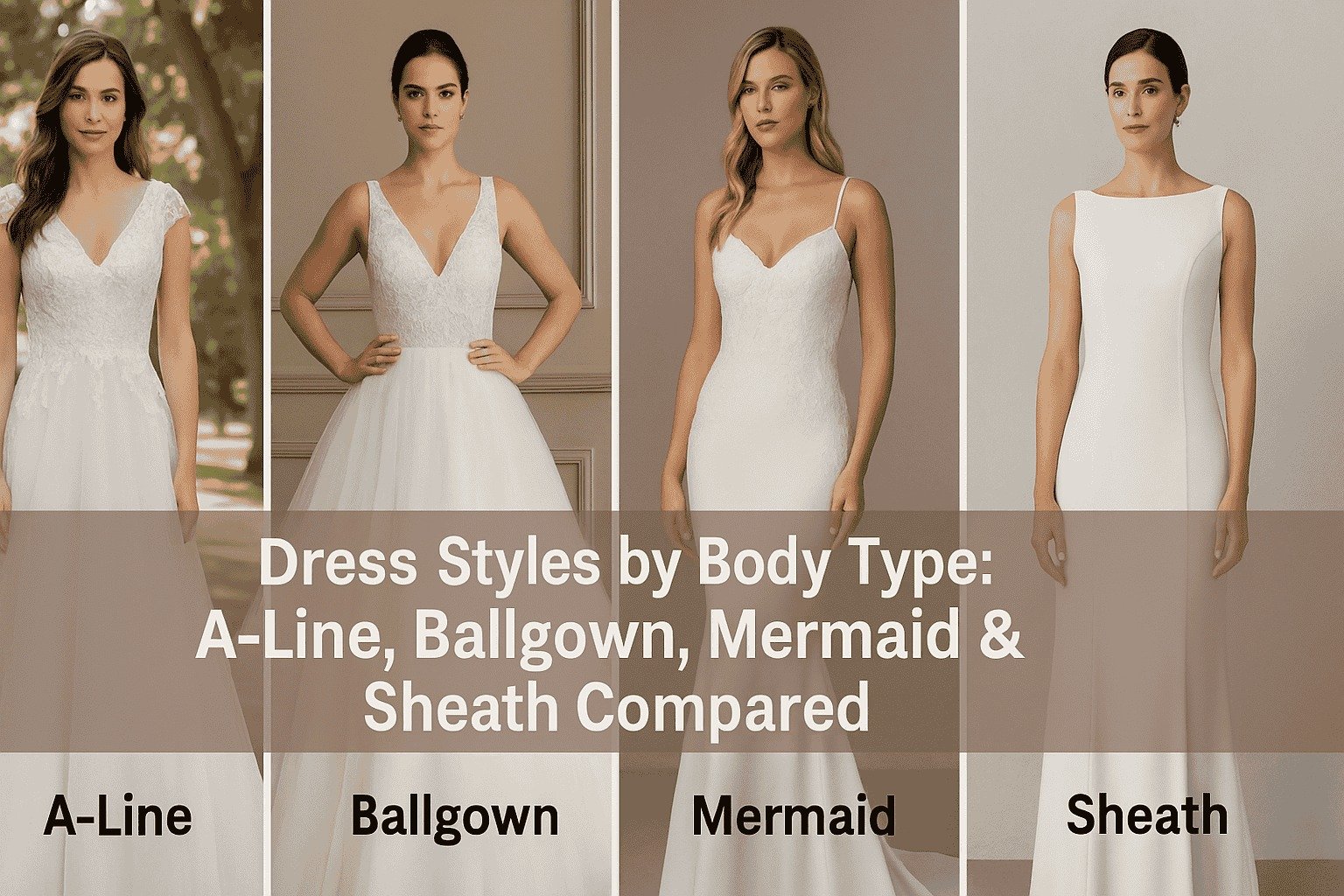
Picking a wedding dress silhouette feels like it should be romantic. In reality, it’s architecture. The shape of your gown structures your entire bridal look, from how you move to how you photograph. I want to cut through the glossy magazine noise and give you the actual mechanics of each silhouette so you can walk into your first fitting knowing exactly what you want to try.
What Is a Silhouette and Why Does It Matter?
A silhouette is the outer shape of a dress when viewed from a distance. It’s the first thing a guest sees when you walk down the aisle and the dominant visual element in every wedding photo. According to a 2024 survey by The Knot, 62% of brides said silhouette was the first factor they considered when shopping for a gown, ahead of fabric, neckline, and embellishment.
The right silhouette works with your proportions and your venue. A ball gown is breathtaking in a cathedral but can feel out of scale in a small outdoor ceremony. A sheath looks sleek in a modern loft venue but can restrict movement on a dance floor. Choosing a silhouette is less about trends and more about matching shape to setting and body.
A-Line Silhouette: The Universal Flattering Shape
The A-line is fitted at the waist and gradually widens toward the hem, creating the shape of a capital letter A. It’s the most popular wedding dress silhouette in the U.S., chosen by approximately 38% of brides according to WeddingWire’s 2023 style report. The reason it tops the list is simple: it flatters nearly every body shape without restricting movement.
A-line works especially well for pear and hourglass figures. It skims the hips rather than hugging them and creates a natural waist emphasis without boning or extreme structure. If you’re petite, an A-line in a lighter fabric like chiffon or tulle keeps proportion balanced. If you’re tall, the same shape in a heavier satin adds gravitas without overwhelming your frame.
Fabric choices for A-line gowns are broad. Chiffon flows beautifully and keeps the silhouette soft. Lace adds texture and a romantic edge. Satin gives structure and photograph well in bright settings. Budget-wise, A-line gowns at David’s Bridal start around $500, while designer A-lines from Vera Wang or Jenny Yoo typically run $2,000 to $4,500.
Ball Gown: The Princess Silhouette
The ball gown has a fitted bodice and a dramatically full skirt that typically starts at the natural waist. It’s the most formal of all bridal silhouettes and carries the heaviest visual weight. Brides who want a grand, cinematic entrance consistently gravitate toward this shape.
Ball gowns suit narrower hips and straighter figures best because the volume of the skirt adds width to the lower body. If you have wider hips, a ball gown can still work beautifully, but you’ll want to try styles with a lower drop waist to lengthen the torso before the skirt begins. The structural layers underneath, typically crinoline or tulle petticoats, determine how full the skirt reads.
The practical reality of a ball gown is weight. A full tulle ball gown can weigh between 8 and 20 pounds, according to bridal alterations specialists. That’s a real consideration for an 8-hour wedding day. If you’re committed to the silhouette, ask your bridal consultant about lighter underlayer options that maintain volume without the full weight.
Mermaid and Trumpet: Fitted Drama
Mermaid and trumpet gowns are the most body-conscious silhouettes. They hug the body from chest to knee or mid-thigh, then flare outward. The difference between the two is where the flare begins. A mermaid flares below the knee, which creates a longer, more dramatic fitted section. A trumpet flares at or just above the knee, which allows slightly more movement and suits a wider range of body types.
These silhouettes work best on hourglass and straight figures with defined waists. They require precise fit because every measurement is visible. Expect two to four fittings for a mermaid or trumpet gown versus one to three for an A-line. Movement is more restricted in a true mermaid, so if you’re a big dancer, a trumpet or fit-and-flare hybrid gives you more floor freedom.
Sheath and Column Dresses: Minimalist Elegance
A sheath dress falls straight from the shoulders to the hem with little to no flare. It’s the choice of the minimalist bride and looks exceptional in sleek fabrics like crepe, silk charmeuse, or jersey. Celebrities including Carolyn Bessette-Kennedy and Meghan Markle both chose column-adjacent silhouettes, which fueled a consistent demand for clean, understated bridal shapes.
Sheath dresses suit tall, lean, and straight figures most naturally. They don’t create curves, so if that’s your goal, this isn’t your silhouette. But if you want to look effortlessly put-together and move with total freedom, a sheath in a quality fabric is unbeatable. Because the fabric does all the work, the quality of material matters more here than in any other silhouette.
Empire Waist: High-Waist Flattery
An empire waist sits just below the bust and flows loosely from there. It’s one of the most flattering shapes for brides who want to draw attention away from the midsection and hips. It’s also the most comfortable silhouette for pregnant brides, because there’s no structure or waistband pressing on the stomach.
Empire waist gowns work across petite, curvy, and pregnant figures. They can look less formal than A-line or ball gown options, so check the dress code of your wedding before committing. In flowy chiffon, an empire gown reads bohemian and romantic. In structured lace, it reads more traditional.
How to Choose Your Silhouette: 5-Step Process
First, look at your venue. A cathedral ceremony suits ball gowns and A-lines. A garden or beach calls for lighter, more relaxed silhouettes. Second, consider how much you want to move. If you plan to dance all night, a sheath or A-line gives you more freedom than a mermaid. Third, try at least two silhouettes that feel outside your comfort zone. Brides routinely fall in love with shapes they dismissed online.
Fourth, factor in your dress timeline. Heavily structured gowns like ball gowns take longer to alter. If you’re shopping with less than six months to your wedding, A-line and sheath gowns have simpler alteration timelines. Fifth, bring one trusted person to your appointment, not five. Too many opinions leads to decision paralysis, and you’ll leave more confused than when you arrived.
FAQs
Q: What is the most flattering wedding dress silhouette?
A: The A-line is widely considered the most universally flattering silhouette because it creates waist definition and flows away from the hips. It works across petite, tall, curvy, and straight body types.
Q: What is the difference between mermaid and trumpet?
A: A mermaid flares below the knee, keeping more of the leg fitted for longer. A trumpet flares at or just above the knee, allowing more movement. Both hug the body closely through the hips.
Q: Can petite women wear ball gowns?
A: Yes, but proportions matter. A dropped waist and lighter underlayer fabric prevent the skirt from visually overwhelming a shorter frame. High heels and an updo help balance the volume.
Q: What silhouette suits an hourglass figure?
A: Mermaid, trumpet, and A-line all work well for hourglass figures. Mermaid and trumpet showcase the waist-to-hip ratio most dramatically. A-line is the more movement-friendly option.
