
Picking bridesmaid dress colors is one of those decisions that sounds simple and turns into a 3-month group chat debate. The color has to look good on multiple skin tones, work with the venue and season, and still feel personal to the wedding. I’ve tracked what’s actually trending in 2026 and what’s quietly fading out, so you can make the call with confidence rather than panic.
2026 Bridesmaid Color Forecast
Sage green was the dominant bridesmaid color of 2023 and 2024. It’s still popular in 2026, but it’s no longer the automatic default. According to the 2025 WeddingWire Color Trends Report, earth-toned and dusty palettes continue to lead, with terracotta, mocha, and warm taupe gaining significant traction. Cool pastels like periwinkle and lavender are the breakout shades for spring and early summer 2026 weddings.
The shift toward warmer neutrals reflects a broader move in bridal aesthetics toward organic textures and earthy tones. Brides are pairing bridesmaid dresses in mocha chiffon with dried floral arrangements, wooden ceremony arches, and linen tablecloths. The result is cohesive and editorial, and it photographs beautifully across different skin tones because warm neutrals are universally flattering.
Dusty Rose and Blush: Timeless or Overdone?
Dusty rose peaked around 2019 to 2021 and has been declining in popularity since. It’s not offensive, but it’s no longer fresh. If your wedding has a very romantic, soft aesthetic, dusty rose still works. But if you want your photos to feel current, blush with a warm undertone (think peach-blush rather than pink-blush) reads more 2026 than pure dusty rose.
Blush in a stretch satin or chiffon still photographs beautifully and suits a wide range of skin tones. If you love the pink family, consider moving toward a warmer mauve or a deeper antique rose rather than the classic dusty rose. These shades feel more elevated without abandoning the soft palette entirely.
Sage Green and Botanical Tones
Sage remains strong because it works across skin tones better than almost any other shade. The 2025 BHLDN Bridesmaid Color Report listed sage as their top-selling bridesmaid color for the third consecutive year. Its staying power comes from its neutrality. Sage sits between green and grey, which means it reads as a neutral in most photographic settings and pairs well with both gold and silver metallic accents.
Botanical tones are expanding the green family in 2026. Deeper olive, fern, and eucalyptus shades are appearing in spring and fall bridesmaid collections. These darker greens photograph moodier and suit garden, vineyard, and outdoor woodland venues exceptionally well.
Champagne, Gold & Warm Neutrals
Champagne bridesmaid dresses are back in a major way for 2026, driven by a broader fashion trend toward warm, metallic neutrals. The key distinction from the guest dress rule is that bridesmaids wearing champagne is entirely appropriate. It’s the guests who should avoid it. A champagne satin bridesmaid dress photographs warmly under both natural and artificial light and pairs beautifully with a white or ivory bridal gown.
Gold charmeuse and bronze are statement choices for evening weddings. These shades look spectacular under candlelight but can wash out in harsh midday sun. If your ceremony is outdoors, test the fabric swatches in direct sunlight before committing to a metallic palette.
Moody Jewel Tones: Burgundy, Navy, Emerald
Jewel tones never fully go out of style for bridesmaid dresses because they suit virtually every season and venue. Burgundy and wine shades remain consistently popular for fall and winter weddings. Navy is one of the most universally flattering bridesmaid colors across different skin tones and remains a perennial best-seller at Azazie, BHLDN, and David’s Bridal.
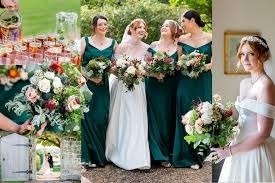
Emerald and forest green are having a strong 2026 moment, particularly for garden and outdoor vineyard weddings. These deeper greens work especially well in velvet for fall ceremonies and in chiffon for summer outdoor events. The key with jewel tones is ensuring the fabric quality is high enough to make the color look rich rather than synthetic.
Mismatched Bridesmaid Dresses
The mismatched bridesmaid trend remains popular in 2026 but has matured significantly. Early versions of this trend used completely different colors and silhouettes, which often looked chaotic in photos. The 2026 approach is more controlled: same color family in different silhouettes, or same silhouette in varying shades of the same color. BHLDN’s mix-and-match collections are specifically designed for this approach.
For same-color, different-silhouette mismatching, pick one base color and let each bridesmaid choose a style that works for her body. For tonal mismatching, choose a color family (dusty blue, for example) and let bridesmaids pick from light periwinkle to deeper slate within that family. Both approaches look intentional and cohesive in photos rather than accidental.
FAQs
Q: What is the most popular bridesmaid color in 2026?
A: Sage green remains the top seller for the third consecutive year according to BHLDN’s color report. Periwinkle and warm terracotta are the breakout shades of 2026, particularly for spring and fall weddings respectively.
Q: Can bridesmaids wear different colors?
A: Yes. Tonal mismatching (different shades of one color) and same-color, different-silhouette approaches are both popular and work well in photos when done with a cohesive color family.
Q: What color bridesmaid dress photographs best?
A: Navy, sage, and dusty rose consistently photograph well across both natural and indoor lighting. Avoid very light pastels in harsh sunlight, which can wash out on camera.
Q: How do I pick bridesmaid dress colors that suit all skin tones?
A: Navy, sage, dusty blue, and warm champagne are the most universally flattering across a range of skin tones. Avoid yellow-greens and orange tones, which are the most difficult shades to flatter across diverse groups.
