
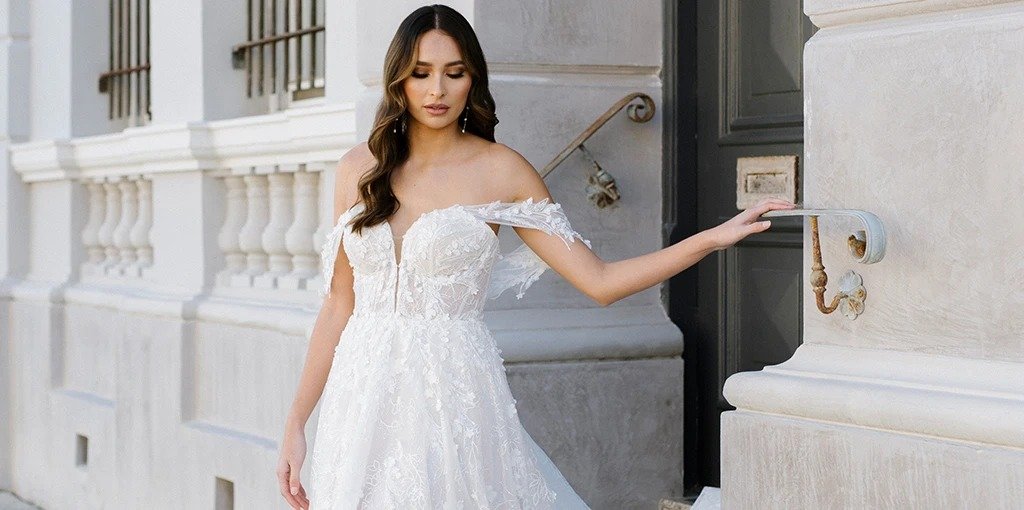
Lace is the most emotional fabric in bridal fashion. It carries tradition, romance, and craftsmanship in a single material. It’s also the most misunderstood. I’ve watched brides reject every lace dress in a boutique because they didn’t know the difference between types, and later regret it. This guide tells you exactly what you need to know before you start trying on.
Why Lace Is the Most Popular Bridal Fabric
Lace dominates bridal fashion because it photographs better than almost any other fabric. Its texture creates visual depth on camera, which means a lace gown looks more detailed and intricate in wedding photos than it does on the hanger. According to Brides Magazine’s 2024 survey, 54% of American brides chose lace as the primary or secondary fabric in their wedding gown. No other fabric comes close.
Beyond photography, lace carries strong emotional and cultural weight. It’s associated with heritage, handcraft, and permanence. Many brides choose lace because their mothers or grandmothers wore it. That emotional connection to the material is a genuine part of its appeal, and no other bridal fabric carries the same generational resonance.
Types of Lace Used in Wedding Dresses
Chantilly lace is the most delicate and most widely used bridal lace. It’s characterized by a fine net background with detailed floral and vine patterns. Chantilly is sheer and lightweight, which makes it ideal for overlays and cap sleeves. The finest Chantilly is produced in France, but high-quality versions are manufactured in the U.S. and Europe. Gowns using genuine French Chantilly start at around $2,500.
Guipure lace, also called Venetian lace, is heavier and more structural than Chantilly. It has no net backing. The motifs connect directly to each other, creating a bold, graphic pattern. Guipure reads modern and architectural, which makes it a favorite for contemporary bridal designers. It’s also more durable and easier to clean than delicate Chantilly.
Alencon lace features a distinct raised cord that outlines each motif, creating a clear definition between the pattern and the fine net background. The scalloped edge that comes naturally with Alencon is one of the most recognizable features in bridal lace and is often used at the hem and sleeve edges of traditional gowns. Re-embroidered Alencon, where the cord is layered multiple times for a raised 3D effect, is a hallmark of luxury bridal.
How to Choose Lace Based on Your Silhouette
Delicate laces like Chantilly work best on soft, flowing silhouettes: A-line, sheath, and empire waist. The lightness of Chantilly complements the movement of these shapes. Heavy laces like Guipure suit more structured silhouettes, particularly ball gowns and mermaid gowns where the fabric needs to hold its shape. The architectural quality of Guipure matches the structural discipline of these silhouettes.
Mixed lace placements are popular in contemporary bridal. A bodice in Guipure over a Chantilly skirt creates contrast between structure and softness. A Chantilly overlay on a satin sheath adds texture without weight. When you’re shopping, ask the boutique specifically which types of lace are used and where, because that combination determines how the dress moves, photographs, and holds up over a long wedding day.
Lace Placement: All-Over, Overlay, or Detail Only
All-over lace is the most traditional and the most cohesive. The dress is constructed primarily in lace from neckline to hem. This approach photographs with the most consistent texture and suits classic bridal styles. An overlay places a sheer lace layer over a solid fabric base, usually satin or crepe. This creates depth: the solid fabric underneath gives structure, and the lace on top provides texture and detail.
Lace as detail only, at the cuffs, neckline, or hem, is the contemporary approach for brides who want lace without committing to it as the dominant fabric. A clean crepe gown with a lace trim hem or a lace illusion neckline gets the texture reference without the full traditional read.
Care and Preservation of Lace Wedding Dresses
Lace is delicate and requires specific care. Before your wedding, store your gown flat or on a padded hanger in a breathable garment bag. Never hang lace by the spaghetti straps. After the wedding, professional cleaning within four to six weeks prevents stains from setting. Preservation boxes with acid-free tissue are the standard storage method, and professional wedding dress preservation services run from $150 to $400.
FAQs
Q: What type of lace is most common in wedding dresses?
A: Chantilly lace is the most widely used bridal lace in the U.S. It’s delicate, lightweight, and photographs with exceptional detail. Alencon and Guipure are strong second choices for different silhouettes.
Q: Is lace too traditional for modern brides?
A: No. Contemporary designers use Guipure and geometric lace patterns in very modern, architectural ways. Lace is as much a design element as a fabric, and its application determines whether a gown reads traditional or modern.
Q: Can you get a lace wedding dress for under $500?
A: Yes. David’s Bridal, Azazie, and ASOS Bridal carry lace-overlay and lace-detail gowns from $250 to $500. The lace quality at this price point is manufactured rather than handcrafted, but the visual effect at that budget is strong.
Q: How do you preserve a lace wedding gown?
A: Have it professionally cleaned within 4 to 6 weeks of the wedding to prevent stain setting. Store in an acid-free preservation box with acid-free tissue paper. Avoid plastic bags, which trap moisture and can yellow lace over time.
