
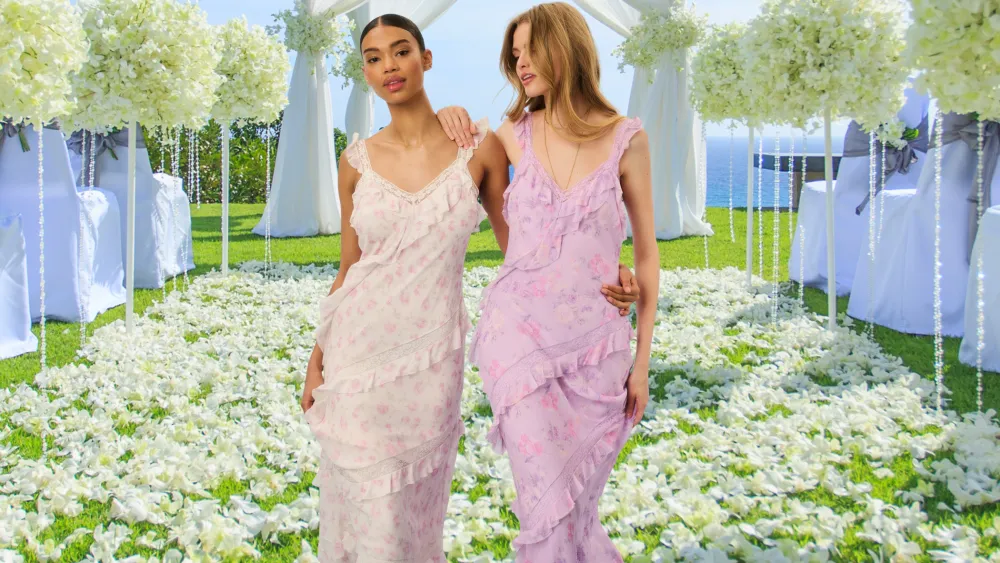
I’ve stood in front of my closet the night before a wedding more times than I care to admit, holding two dresses up to the mirror and genuinely panicking. The wrong choice isn’t just a fashion miss. It’s a full day of tugging, sweating, or shivering through someone’s big moment. This guide fixes that. I’ve broken it down by season so you know exactly what to wear before you even open your closet.
How to Dress for a Spring Wedding (March to May)
Spring weddings sit in a sweet spot. The weather isn’t punishing, the mood is light, and florals make complete sense. According to The Knot’s 2024 Real Weddings Study, spring remains the second most popular season for weddings in the U.S., right behind fall. That means you need a spring outfit that works across morning garden ceremonies and early evening receptions.
Floral midi dresses are the safest call for spring. They read festive without trying too hard. Stick to smaller prints if you’re shorter, and larger blooms if you’re taller. Pastel palettes like blush, sage, lavender, and powder blue photograph beautifully in natural spring light. A blush A-line midi from ASOS or a sage wrap dress from Anthropologie both land in the $80-$150 range, which is the sweet spot for guest wear.
For fabric, I’d pick chiffon or a cotton-linen blend. Chiffon flows nicely in an outdoor breeze, and it doesn’t wrinkle in a car seat the way satin does. A lace overlay works too, especially for church ceremonies. Avoid polyester satin in spring. It doesn’t breathe, and you’ll feel it by the second hour of the reception.
Summer Wedding Guest Outfits (June to August)
Summer weddings mean heat. The average U.S. summer temperature hits 86°F in southern states and 75°F in the northeast, which means fabric choice isn’t a styling question. It’s a survival question. Sleeveless and off-shoulder styles are your allies here. A wrap dress in a light, breathable fabric does double duty by staying cool and looking put-together.
Here’s a rule I follow without exception: never wear white, ivory, cream, or champagne to a summer wedding. Those shades are tricky even in winter, but in bright summer light, they read bridal from across the room. A champagne satin dress can look almost white in direct sunlight. Pick dusty rose, cobalt, marigold, or sage instead.
Block heels and wedges beat stilettos at every outdoor summer wedding. According to a 2023 survey by Brides Magazine, 68% of brides said uneven outdoor terrain was a top complaint from guests. A 2.5-inch block heel gives you height without the sinking-into-grass problem that ruins both shoes and moods.
Fall Wedding Guest Fashion (September to November)
Fall is the most popular wedding season in the U.S. The Knot reports that 37% of couples choose September through November for their date. That means you’ll get more invites during this stretch than any other time of year, so a solid fall occasion dress is worth the investment. Velvet, satin, and wrap dresses in jewel tones are the triumvirate of fall guest fashion.
Burgundy, forest green, burnt orange, navy, and plum all photograph stunningly in fall foliage settings. A velvet slip dress in deep burgundy pairs with nude block heels and a thin gold necklace. It’s polished, seasonally right, and won’t be confused with the bridal party’s champagne gowns. Nordstrom and BHLDN both carry solid velvet options in the $90-$180 range.
Layering is smarter than packing a jacket. A thin wrap or pashmina in a complementary color adds warmth without adding bulk to your look. For evening fall ceremonies, a tailored blazer over a slip dress hits a strong contemporary note. The key with layering is keeping it intentional. One layer, worn deliberately, beats three thrown-on pieces every time.
Winter Wedding Guest Dresses (December to February)
Winter weddings ask more of your wardrobe than any other season. You need warmth, formality, and something that doesn’t look like a holiday party leftover. Long-sleeve formal gowns are the cleanest solution. A floor-length dress in crepe or velvet handles the temperature and the dress code simultaneously.
Dark jewel tones dominate winter occasion wear for good reason. Deep sapphire, emerald, wine, and midnight blue feel inherently formal and work across candlelit ballrooms and hotel event spaces. Metallic fabrics like gold charmeuse or silver jacquard work at evening winter weddings but can veer costumey in the wrong setting, so check the venue type before you commit.
Thermal shapewear is your practical secret weapon in winter. Brands like Spanx and Skims sell heat-retaining bodysuits that layer invisibly under formal wear. A pair of sheer tights in a nude or black tone adds another layer of warmth without disrupting the look of your dress. Winter weddings are long. Dress for the whole day, not just the photos.
Color Rules: What Not to Wear as a Guest
The absolute no-fly zone is white and anything that lives near it. Ivory, cream, off-white, champagne, and eggshell are all risky. In photos or outdoor light, these shades can appear bridal, and that’s not a look any guest wants to accidentally own. Beyond white, I’d also steer clear of matching the known bridesmaid color if you know it in advance.
Black is always appropriate, full stop. Despite the old myth that black at weddings signals mourning, it’s now the second most popular guest dress color in the U.S. according to a 2023 WeddingWire survey. Style it celebratory by adding a bold earring, a colorful wrap, or a metallic shoe. The black dress itself isn’t the issue. The accessories are what make it read festive or funereal.
FAQs
Q: What should a wedding guest avoid wearing?
A: Avoid white, ivory, champagne, cream, and anything that could read bridal in photos. Also skip matching the known bridesmaid color and overly casual fabrics like denim or athletic wear, regardless of the season.
Q: Can I wear black to a wedding?
A: Yes. Black is one of the most appropriate guest colors across all seasons and dress codes. Style it with festive accessories to keep it celebratory rather than somber.
Q: What does cocktail attire mean for a wedding guest?
A: Cocktail attire means a knee-to-midi-length dress or a dressy jumpsuit. It sits between casual and formal. Think polished but not floor-length.
Q: Is it okay to wear floral to a wedding?
A: Absolutely. Floral prints are among the most widely accepted wedding guest choices, especially in spring and summer. Keep the print scale proportional to your frame and stick to non-white background colors.
