
Introduction
Choosing spring wedding colors feels overwhelming when Pinterest overflows with countless beautiful palettes yet offers little guidance on what actually works cohesively. You want colors that feel fresh and seasonal without appearing dated in photos years later, while coordinating florals, bridesmaid dresses, and décor seamlessly. The right spring wedding colors establish your celebration’s entire aesthetic foundation while complementing the season’s natural beauty.

Table of contents
- Introduction
- What Are Spring Wedding Colors?
- Why Spring Wedding Colors Matter in 2026
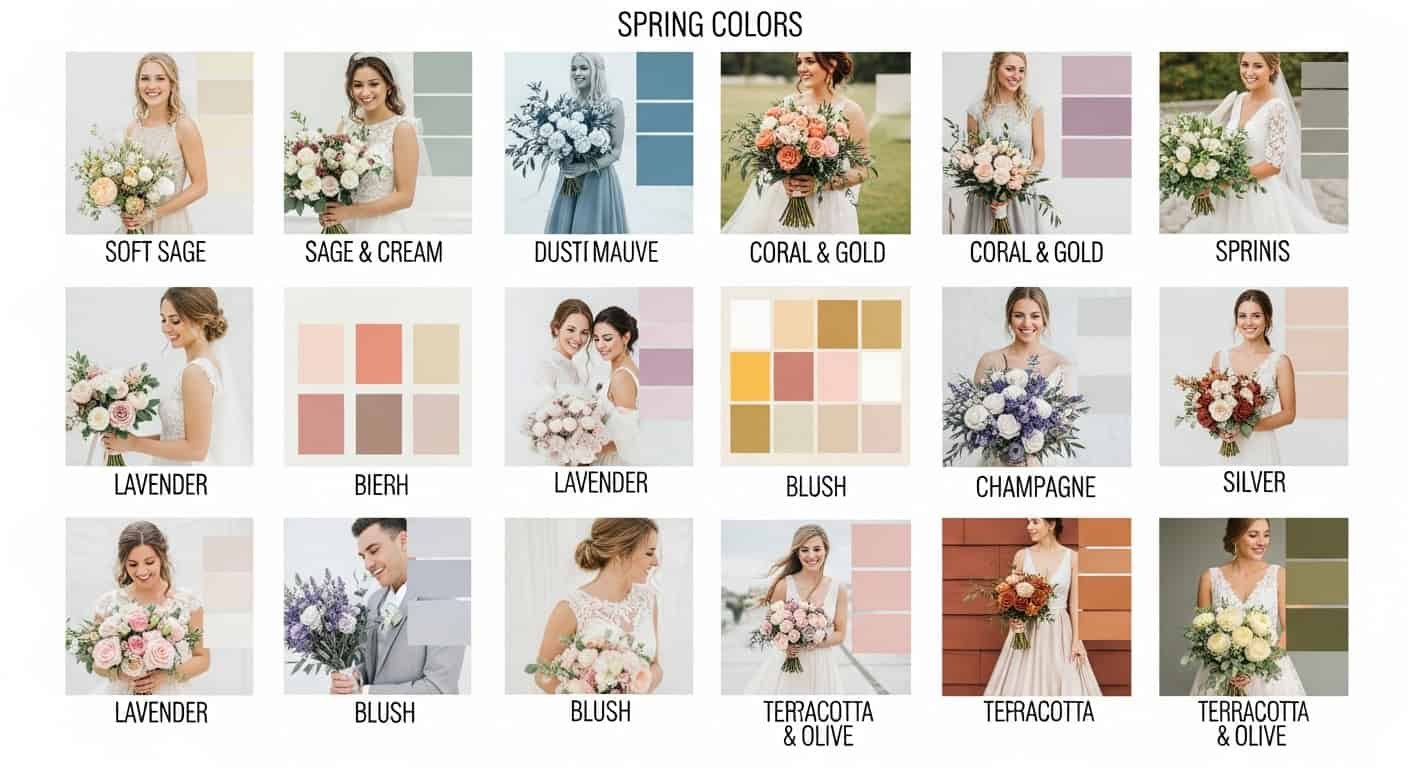
- 15 Spring Wedding Colors Brides Are Loving This Year
- 1. Soft Sage Green and Cream
- 2. Dusty Blue and Mauve
- 3. Coral and Gold
- 4. Lavender and Silver
- 5. Blush Pink and Champagne
- 6. Terracotta and Olive Green
- 7. Lemon Yellow and White
- 8. Mint Green and Peach
- 9. Burgundy and Blush
- 10. Navy Blue and Pink
- 11. Apricot and Ivory
- 12. Lilac and Gray
- 13. Fuchsia and Emerald Green
- 14. Butter Yellow and Sage Green
- 15. Peacock Blue and Gold
- Comparison Table: Spring Wedding Color Palettes
- Common Mistakes to Avoid
- Expert Tips for Perfect Spring Wedding Colors
- FAQs About Spring Wedding Colors
In this comprehensive guide, you’ll discover:
- 15 stunning spring wedding color palettes trending among modern brides this year
- Expert coordination strategies for florals, attire, and décor across your chosen palette
- Practical guidance on selecting colors that photograph beautifully and remain timelessly elegant
Whether you’re planning an intimate garden ceremony or grand ballroom reception, these carefully curated spring wedding colors ensure your celebration feels authentically seasonal while reflecting your personal style perfectly throughout every detail.
What Are Spring Wedding Colors?

Spring wedding colors are curated color palettes inspired by spring’s natural elements including blooming flowers, fresh foliage, and renewed seasonal energy. These palettes typically feature soft pastels, vibrant botanicals, warm neutrals, and nature-inspired hues that coordinate across bridesmaid dresses, florals, linens, and décor. Effective spring wedding colors create cohesive visual experiences while celebrating the season’s characteristic freshness.
Why Spring Wedding Colors Matter in 2026
Spring wedding color trends have evolved dramatically, with 2026 brides moving beyond traditional pastels toward more sophisticated, nuanced palettes. Pinterest reports 156% year-over-year search increases for “unexpected spring wedding colors” as couples seek distinctive alternatives to conventional choices. The rise of personalized celebrations means color selection now reflects individual style rather than seasonal defaults. Professional photographers increasingly emphasize how thoughtful color coordination dramatically elevates wedding imagery quality. Additionally, sustainable wedding movements influence color choices toward naturally available seasonal blooms, reducing environmental impact while enhancing aesthetic authenticity.
15 Spring Wedding Colors Brides Are Loving This Year
1. Soft Sage Green and Cream
Soft sage green embodies spring’s fresh growth while maintaining sophisticated elegance that photographs beautifully. Paired with cream, this palette creates calming, natural environments perfect for garden or outdoor celebrations. The muted green tone suits all skin tones beautifully, making bridesmaids universally happy with their dress selection.
Furthermore, sage and cream leverage seasonal foliage abundance, reducing floral costs significantly while maintaining lush, organic aesthetics. This versatile combination works across rustic, elegant, and modern wedding styles. The neutral foundation ensures your photos remain timeless rather than appearing dated as color trends inevitably shift.
2. Dusty Blue and Mauve
Dusty blue offers unexpected sophistication compared to traditional spring pastels while maintaining seasonal appropriateness. Combined with warm mauve tones, this palette creates depth and visual intrigue that photographs with exceptional richness. The cool-warm balance ensures the combination feels cohesive rather than disjointed.
This color pairing particularly suits evening celebrations where subtle lighting enhances the palette’s romantic qualities. Both colors complement diverse skin tones beautifully and photograph consistently across various lighting conditions. The muted intensity prevents overwhelming vibrancy while maintaining distinct, memorable aesthetic presence throughout celebrations.
3. Coral and Gold
Coral brings joyful energy perfect for celebrating spring’s renewal and optimism. Gold accents add luxurious sophistication, preventing coral from feeling too casual or juvenile. This warm, cheerful combination suits daytime celebrations beautifully, photographing with exceptional vibrancy under natural sunlight.
The palette particularly complements warm undertone skin beautifully while flattering most complexions overall. Coral’s versatility allows interpretation from soft peach to vibrant orange-pink depending on desired intensity. Gold metallic elements through candlesticks, flatware, and escort cards elevate the combination’s overall elegance significantly.
4. Lavender and Silver
Lavender celebrates spring’s blooming flowers while offering romantic femininity without excessive sweetness. Silver metallics provide cool sophistication that grounds lavender’s softness with contemporary edge. This combination photographs beautifully in both natural and artificial lighting conditions consistently.
Spring’s natural lavender bloom availability including wisteria, lilacs, and sweet peas makes this palette budget-friendly and seasonally authentic. The color pairing suits both garden and ballroom venues equally well. Silver elements through linens, votives, and flatware create cohesive elegance throughout reception spaces.
5. Blush Pink and Champagne
Blush pink remains perpetually elegant, offering soft romance without appearing childish or overly saccharine. Champagne neutrals provide sophisticated grounding that prevents blush from feeling too feminine or one-dimensional. This classic combines photographs with exceptional warmth and timeless appeal.
The neutral-forward palette allows bold floral arrangements to create visual impact without color competition. This versatility means bridesmaids can rewear champagne dresses easily while blush florals complement rather than match exactly. The soft, monochromatic approach creates cohesive sophistication that never feels dated.
6. Terracotta and Olive Green
Terracotta introduces unexpected earthiness perfect for bohemian or organic spring celebrations. Paired with olive green, this palette feels grounded in nature rather than artificially constructed. The warm, earthy combination suits outdoor venues beautifully, complementing natural surroundings rather than competing visually.
This color pairing particularly resonates with eco-conscious couples prioritizing sustainable celebrations and locally sourced elements. Both colors exist abundantly in nature, making foliage and botanical elements naturally coordinate. The rich, saturated tones photograph with exceptional depth, creating magazine-worthy images without requiring extensive styling.
7. Lemon Yellow and White
Lemon yellow radiates optimism and energy synonymous with spring’s arrival and renewal. Crisp white provides clean contrast that prevents yellow from overwhelming while maintaining fresh, airy aesthetics. This high-contrast combination creates bold visual statements that photograph with exceptional clarity and vibrancy.
Spring’s natural yellow blooms including daffodils, tulips, and forsythia make this palette seasonally authentic and budget-friendly. The cheerful combination suits daytime garden celebrations particularly beautifully. However, strategic use prevents excessive brightness—concentrate yellow in florals and accents while keeping larger elements neutral.
8. Mint Green and Peach
Mint green offers refreshing coolness that embodies spring without feeling predictably pastel. Peach introduces warmth that balances mint’s coolness, creating harmonious complementary relationships. This sweet yet sophisticated combination suits garden parties, brunch weddings, and daytime celebrations beautifully.
The soft, approachable palette creates welcoming environments where guests feel immediately comfortable. Both colors flatter diverse skin tones, making bridesmaids genuinely happy with their dresses. Vintage-inspired styling particularly suits this color combination, adding nostalgic charm to modern celebrations.
9. Burgundy and Blush
Burgundy provides unexpected depth for spring weddings, offering richness typically reserved for fall celebrations. Combined with soft blush, burgundy feels less heavy and more seasonally appropriate. This sophisticated pairing creates a dramatic visual impact that photographs with exceptional depth and dimension.
The high-contrast combination suits brides wanting distinctive spring palettes avoiding predictable pastels entirely. Burgundy bridesmaid dresses photograph beautifully while remaining rewearable for other formal occasions. This palette particularly suits evening celebrations where dramatic lighting enhances the romantic, moody qualities.
10. Navy Blue and Pink
Navy blue provides grounding sophistication that elevates pink from juvenile to refined elegance. This classic combination offers preppy charm perfect for yacht clubs, historic estates, or coastal venues. The high-contrast pairing photographs with exceptional clarity across all lighting conditions consistently.
The Navy’s versatility means bridesmaid dresses remain rewearable while pink florals provide seasonal freshness and femininity. This palette suits various pink interpretations from soft blush to vibrant fuchsia depending on desired intensity. The timeless combination ensures photos remain elegant decades after weddings.
11. Apricot and Ivory
Apricot offers warmth and approachability that feels genuinely inviting rather than stiff or formal. Ivory provides sophisticated neutrality that allows apricot to shine without competing colors diluting impact. This warm, monochromatic approach creates cohesive elegance throughout all wedding elements consistently.
The palette particularly suits brides with warm undertones, complementing skin beautifully in photos. Spring’s abundant peach and apricot blooms make this choice seasonally authentic and cost-effective. Sunset timing enhances the warm palette beautifully through natural golden hour light.
12. Lilac and Gray
Lilac celebrates spring’s blooming trees while gray adds contemporary sophistication preventing excessive sweetness. This modern combination feels fresh and current rather than traditionally expected. The cool-toned palette photographs beautifully in urban, industrial, or modern venue settings particularly well.
Gray suits for groomsmen coordinate effortlessly while lilac bridesmaid dresses provide distinctive color without overwhelming vibrancy. This palette suits minimalist or contemporary wedding styles where clean lines and modern aesthetics dominate. The restrained color approach creates sophisticated elegance through thoughtful minimalism.
13. Fuchsia and Emerald Green
Fuchsia brings bold confidence perfect for brides wanting distinctive, memorable color statements. Emerald green provides lush richness that grounds fuchsia’s intensity while adding natural elegance. This high-impact combination suits outdoor garden settings where bold colors complement rather than compete with surroundings.
The jewel-tone pairing photographs with exceptional saturation and depth that creates magazine-worthy imagery. This palette particularly suits multicultural celebrations or tropical-inspired weddings where vibrant colors feel culturally authentic. While bold, proper balance prevents overwhelming—concentrate color in florals and accents.
14. Butter Yellow and Sage Green
Butter yellow offers softer warmth than bright lemon while maintaining spring’s characteristic cheerfulness. Sage green provides natural grounding that makes yellow feel sophisticated rather than juvenile. This nature-inspired combination celebrates spring’s emerging landscapes through thoughtful color relationships that feel organically connected.
The palette suits daytime celebrations particularly beautifully, especially brunches or afternoon garden parties. Both colors exist abundantly in spring nature, making floral and botanical elements naturally coordinate. The soft, organic approach creates welcoming environments where guests feel immediately comfortable and relaxed.
15. Peacock Blue and Gold
Peacock blue offers unexpected richness that distinguishes spring weddings from predictable pastel conventions. Gold accents provide luxurious sophistication that elevates the combination to black-tie appropriate elegance. This jewel-tone approach suits formal ballroom celebrations where opulence and drama create desired atmospheres.
The rich, saturated colors photograph with exceptional depth under both natural and artificial lighting conditions. This palette particularly suits evening celebrations where dramatic lighting enhances the combination’s inherent glamour. While bold, proper proportion prevents overwhelming—use peacock blue as primary with gold accents strategically placed.
Comparison Table: Spring Wedding Color Palettes
| Color Palette | Style | Best Venue Type | Formality Level | Budget Impact | Photo Quality |
| Sage & Cream | Organic/Elegant | Garden/Outdoor | Moderate | Low-Medium | Excellent |
| Dusty Blue & Mauve | Romantic | Ballroom/Garden | Moderate-Formal | Medium | Excellent |
| Coral & Gold | Vibrant/Luxury | Outdoor/Ballroom | Moderate-Formal | Medium-High | Excellent |
| Lavender & Silver | Romantic/Refined | Ballroom/Garden | Formal | Medium | Very Good |
| Blush & Champagne | Classic/Timeless | Any Venue | Moderate-Formal | Medium | Excellent |
| Terracotta & Olive | Bohemian | Outdoor/Garden | Casual-Moderate | Low-Medium | Very Good |
| Lemon & White | Fresh/Cheerful | Garden/Outdoor | Casual-Moderate | Low | Very Good |
| Navy & Pink | Preppy/Classic | Estate/Coastal | Moderate-Formal | Medium | Excellent |
| Fuchsia & Emerald | Bold/Tropical | Garden/Outdoor | Moderate | Medium | Excellent |
| Peacock & Gold | Luxurious/Formal | Ballroom/Estate | Formal-Black Tie | High | Excellent |
Table Summary: Sage and cream, along with terracotta and olive, offer the most budget-friendly options while maintaining high photographic quality. Formal ballroom celebrations suit dusty blue, lavender, and peacock palettes beautifully. Garden and outdoor venues accommodate the widest variety of spring wedding colors successfully.
How to Choose Your Spring Wedding Colors: Step-by-Step Guide
- Start with your wedding venue and time of day
Examine your venue’s existing colors including walls, floors, and fixed elements that cannot change. Garden venues with abundant greenery suit different palettes than ballrooms with neutral tones. Consider ceremony timing as afternoon light renders colors differently than evening illumination affects perception.
- Select one dominant color anchoring your palette
Choose a primary color representing 50-60% of your overall color presence. This dominant hue should appear in bridesmaid dresses, major floral elements, and significant décor pieces. Starting with one strong anchor prevents palette confusion and provides clear direction.
- Add two complementary accent colors
Select two supporting colors comprising 20-25% each of your palette. These accents should harmonize with your dominant color while adding visual interest and depth. Test combinations photographing color swatches together under various lighting conditions before committing.
- Incorporate one neutral foundation color
Add a neutral like ivory, champagne, taupe, or soft gray as your foundation representing 10-15% of the palette. Neutrals ground bolder colors, provide visual rest, and ensure sophisticated rather than overwhelming results. They also coordinate easily across rental items.
- Test your palette with actual material samples
Collect fabric swatches, ribbon samples, and floral examples in your chosen colors. Photograph them together in your venue’s lighting to understand how colors interact. Screen colors differ dramatically from physical materials, making real-world testing essential.
Common Mistakes to Avoid
Choosing colors based solely on trends rather than personal preference
Following Pinterest trends without considering your actual aesthetic preferences creates disconnect between you and your celebration. Trendy colors feel dated quickly while personally meaningful choices remain emotionally resonant. Select colors genuinely reflecting your style.
Ignoring the venue’s existing color palette
Venues have fixed colors in walls, floors, and furnishings that significantly impact your palette. Choosing colors that clash with venue creates visual chaos with no amount of decoration fixes. Photograph venue in various lighting before finalizing color decisions.
Selecting too many colors creates visual confusion – More colors don’t equal better results. Palettes with 3-4 colors maximum create sophisticated cohesion while excessive colors feel chaotic and uncoordinated. Stick with one dominant, two accents, and one neutral for optimal results.
Not testing colors in actual venue lighting – Colors appear dramatically different under natural daylight versus artificial evening lighting. What looks beautiful on Pinterest may photograph poorly in your specific venue conditions. Always test physical color samples in actual venue lighting.
Forgetting seasonal flower availability impacts color choices
Forcing out-of-season flowers in specific colors increases costs exponentially and decreases bloom quality. Choose colors matching naturally available spring flowers for better results and significant budget savings throughout planning.
Expert Tips for Perfect Spring Wedding Colors
Create a comprehensive color board for vendor consistency
Develop detailed boards including Pantone numbers, fabric swatches, ribbon samples, and inspirational photos clearly communicating your vision. Distribute to all vendors ensuring consistent color interpretation across florals, linens, invitations, and rentals throughout planning.
Consider how colors photograph in your specific lighting
Some colors that appear beautiful in person photograph poorly or differently than expected. Jewel tones photograph richly while very pale colors sometimes wash out. Consult your photographer about color choices ensuring they translate beautifully.
Balance bold colors with sufficient neutral grounding – Even vibrant palettes need neutral foundations preventing overwhelming sensory experiences. Use neutrals for larger elements like linens while concentrating bold colors in florals and accent pieces. This balance creates sophisticated rather than chaotic results.
Test color combinations with real material samples together – Screen colors differ dramatically from physical materials. Collect actual fabric, ribbon, and floral samples, photographing them together in various lighting. This testing prevents disappointing surprises when final elements arrive.
Consider seasonal progression throughout your wedding date – Spring colors shift from soft pastels in early season to richer, more saturated tones as season progresses. April weddings suit different palettes than late May celebrations when nature displays bolder colors naturally.
FAQs About Spring Wedding Colors
The best spring wedding colors include soft sage green, dusty blue and mauve, coral and gold, lavender and silver, and blush pink with champagne. Modern brides also love terracotta with olive green, lemon yellow with white, and navy blue with pink. Choose 3-4 colors maximum for cohesive sophistication.
Choose spring wedding colors by starting with your venue’s existing tones, selecting one dominant color (50-60% of palette), adding two complementary accents (20-25% each), and including one neutral foundation (10-15%). Test real material samples together in your venue’s lighting before finalizing decisions.
Trending spring wedding colors for 2026 include sophisticated combinations like dusty blue with mauve, terracotta with olive green, and burgundy with blush. Soft sage green paired with cream dominates Pinterest searches. Unexpected jewel tones like peacock blue and fuchsia gain popularity over traditional pastels.
