
Introduction
Planning a wedding bouquet shouldn’t feel overwhelming yet for so many brides, the sheer volume of floral options creates exactly that. If you’re drawn to calm, intentional beauty over elaborate excess, a zen bouquet might be the most authentic choice you make for your entire wedding day.
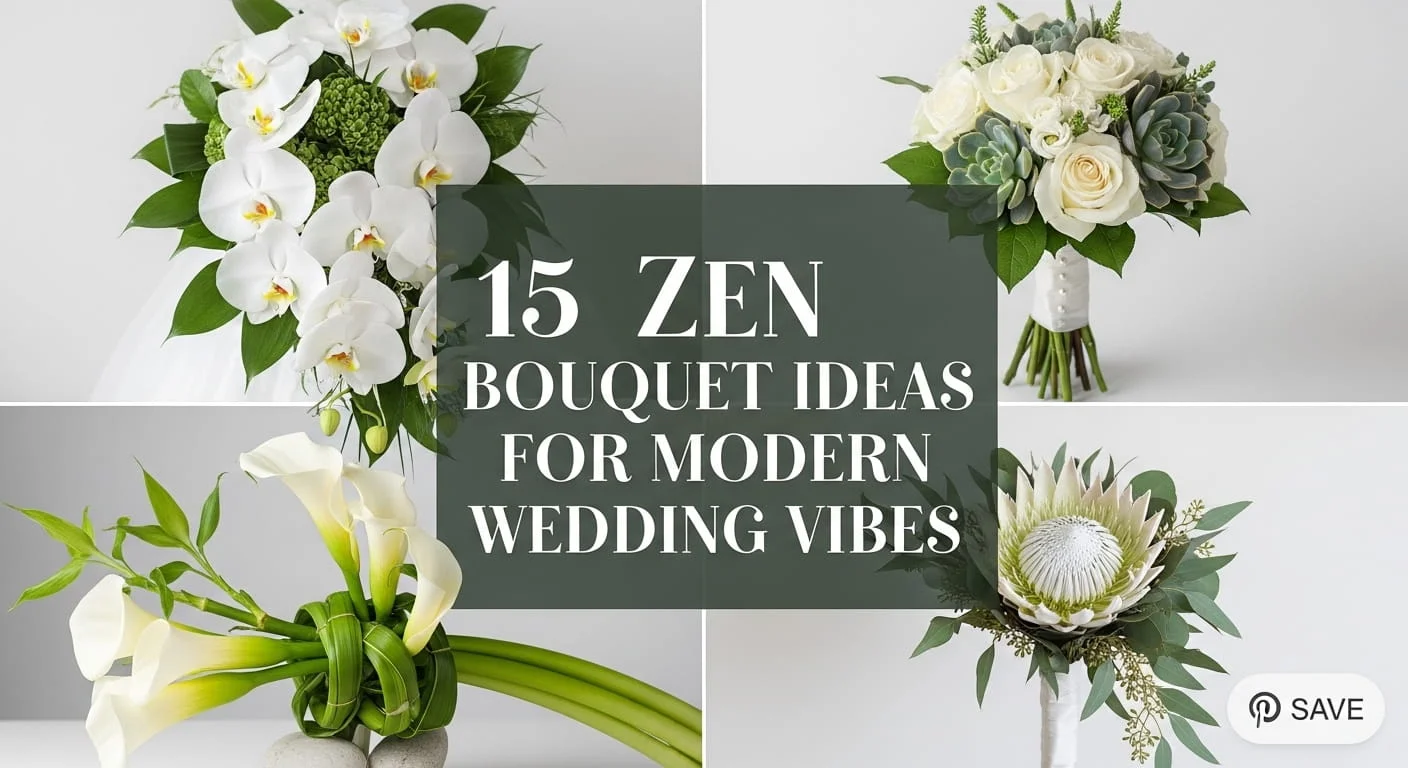
Zen bouquet ideas combine minimalist design, natural textures, and a deliberate restraint that feels both modern and deeply peaceful. The result is a bouquet that doesn’t just look beautiful — it feels meaningful. In this guide, you’ll discover:
- 15 carefully curated zen bouquet ideas designed for modern wedding aesthetics
- Expert tips on choosing the right blooms, textures, and color palettes for a zen arrangement
- Common mistakes to avoid when building a minimalist floral design that still feels luxurious

Table of contents
- Introduction
- What Is a Zen Bouquet?
- Why Zen Bouquet Ideas Matter in 2026
- Key Benefits of Choosing a Zen Bouquet
- 15 Zen Bouquet Ideas for Modern Wedding Vibes
- 2. White Anemone and Dried Grass Bouquet
- 3. Green and White Orchid Bouquet
- 4. Minimalist Eucalyptus and White Rose Bouquet
- 5. Dried Flower Zen Bouquet with Pampas Grass
- 6. Japanese-Inspired Ikebana Style Bouquet
- 7. All-Green Botanical Bouquet
- 8. White Lotus and Lily Pad Bouquet
- 10. Sage and Cream Herb Bouquet
- 11. Black and White Zen Bouquet
- 12. Wabi-Sabi Imperfect Flower Bouquet
- 13. Monochromatic White Zen Bouquet
- 14. Zen Bouquet for Men: Minimalist Buttonhole Alternative
- 15. Floating Feather and Orchid Zen Bouquet
- Common Mistakes to Avoid When Creating a Zen Bouquet
- Expert Tips for Designing the Perfect Zen Bouquet
- FAQs: Zen Bouquet Ideas
What Is a Zen Bouquet?
A zen bouquet is a minimalist floral arrangement inspired by Japanese aesthetic principles — simplicity, natural harmony, and intentional design. Rather than maximizing bloom count, a zen bouquet uses carefully selected flowers, greenery, and negative space to create a composition that feels calm, balanced, and deeply elegant.
Why Zen Bouquet Ideas Matter in 2026
In 2026, the wedding industry is experiencing a significant shift away from maximalist florals toward mindful, nature-inspired design. Couples increasingly prioritize meaning over volume, seeking arrangements that reflect their values and aesthetic sensibility rather than simply following convention.
Pinterest trend data consistently shows rising search interest in terms like “minimalist wedding flowers,” “zen wedding aesthetic,” and “bouquet of flowers aesthetic” — all pointing toward a broader cultural appetite for calm, considered beauty. Meanwhile, sustainability concerns are driving brides toward smaller, more intentional arrangements that reduce floral waste without sacrificing visual impact.
The zen bouquet sits perfectly at the intersection of these trends. It is photogenic without being excessive, personal without being complicated, and environmentally conscious without requiring compromise on elegance. For the modern bride building her wedding vision on Pinterest or Google, the zen bouquet is one of the most relevant and resonant concepts in contemporary wedding florals.
Key Benefits of Choosing a Zen Bouquet
Choosing a zen-inspired arrangement for your wedding day offers far more than aesthetic appeal. Here’s why this approach resonates with modern brides:
- Timeless visual impact Minimalist arrangements never date. A zen bouquet will look as beautiful in photographs twenty years from now as it does on your wedding day.
- Budget-conscious elegance Fewer blooms, thoughtfully chosen, can create more visual impact than an overstuffed arrangement at a fraction of the cost.
- Sustainability alignment Smaller, intentional bouquets reduce floral waste and often allow for the use of locally grown or seasonal flowers.
- Reduced stress in planning With fewer elements to coordinate, a zen bouquet simplifies the floral planning process considerably.
- Versatility across venues Whether your venue is a Japanese garden, a minimalist art gallery, or a coastal ceremony space, a zen bouquet suits every setting.
- Photographic clarity Clean lines and considered negative space make zen bouquets exceptionally photogenic, particularly in documentary and editorial-style wedding photography.
- Personal meaning Every element in a zen bouquet is chosen deliberately, making the arrangement a more deeply personal and intentional expression of who you are.
15 Zen Bouquet Ideas for Modern Wedding Vibes
1. Single-Stem White Calla Lily Bouquet

Few flowers embody zen philosophy as purely as the calla lily. Its clean, architectural form — a single continuous curve from stem to bloom requires no accompaniment to be visually complete. A single-stem calla lily bouquet is a statement of absolute confidence, where the absence of excess communicates everything about your aesthetic.
This arrangement is particularly powerful for contemporary and minimalist wedding settings — think white-walled galleries, Japanese garden ceremonies, or architectural modern venues. The single stem also makes this one of the most comfortable bouquets to carry, allowing you to move naturally and gracefully throughout your wedding day without managing a heavy, cumbersome arrangement.
2. White Anemone and Dried Grass Bouquet
White anemones have an inherent visual tension their pure white petals surrounding a dramatically dark center create contrast and interest without requiring additional color. Paired with wispy dried grasses, this combination achieves a beautifully balanced dialogue between structure and softness, formality and nature.
The dried grass element also makes this bouquet practical for warm-weather weddings, as it requires no water and will not wilt during a long summer ceremony. This arrangement photographs magnificently against natural stone, raw timber, or architectural concrete — materials that amplify the zen aesthetic and give the white blooms maximum visual prominence.
3. Green and White Orchid Bouquet
Orchids are among the most inherently zen flowers available to modern brides. Their structure is deliberate and precise, their color often restrained, and their overall presence quietly commanding. A bouquet built around white and green cymbidium orchids conveys elegance and sophistication without a single unnecessary element.
The trailing stem of a single cascading orchid adds a subtle movement and dynamism to the arrangement without abandoning the overall sense of calm. This bouquet suits contemporary brides who appreciate fashion-forward design and want their florals to feel more like art objects than traditional bridal accessories. It is an exceptional choice for rooftop, gallery, or modern urban wedding venues.
4. Minimalist Eucalyptus and White Rose Bouquet
Sometimes, the most powerful zen statement is made with the fewest elements. Three white garden roses set within a framework of silver eucalyptus nothing more create a bouquet that is quietly breathtaking in its restraint. The silvery-green foliage provides cool visual contrast against the warm white of the roses, producing a composition that feels naturally balanced.
This arrangement is ideal for Scandinavian-inspired weddings, minimalist civil ceremonies, and intimate elopements where every detail is chosen with care. The eucalyptus carries a fresh, clean fragrance that adds a sensory dimension to the bouquet beyond its visual beauty, making this one of the most immersive zen arrangements on this list.
5. Dried Flower Zen Bouquet with Pampas Grass
Dried flowers represent one of the most philosophically aligned choices for a zen bouquet they embody acceptance of impermanence, a central concept in zen thinking. A dried arrangement featuring bleached pampas grass, lunar seed pods, and pale dried protea creates a bouquet that is soft, textural, and deeply organic in character.
Beyond its philosophical resonance, a dried zen bouquet is highly practical. It requires no water, will not wilt on a warm day, and can be preserved indefinitely as a keepsake from your wedding. For destination weddings, elopements, or outdoor ceremonies in warm climates, the dried bouquet is both the most zen and the most sensible choice available.
6. Japanese-Inspired Ikebana Style Bouquet
Ikebana, the ancient Japanese art of flower arranging is arguably the purest expression of the zen aesthetic in floral design. An ikebana-inspired bouquet deliberately uses asymmetry, negative space, and the natural growth direction of plant material to create an arrangement that feels alive, balanced, and intentional in a way that conventional bouquets rarely achieve.
For the bride who wants her bouquet to be a genuine conversation piece and a personal artistic statement, this style is transformative. It requires a florist with genuine understanding of ikebana principles, so communicate this vision clearly and provide strong reference images. The result, when executed well, is unlike anything else in contemporary wedding florals.
7. All-Green Botanical Bouquet
An all-green bouquet might initially seem understated but in practice, it is one of the most visually striking and uniquely elegant choices a bride can make. By working exclusively within the green palette, this arrangement draws attention to the extraordinary variety of textures, forms, and tones available within a single color family.
Succulents add a structural, almost sculptural quality that balances the softness of fern and hosta leaves. This bouquet also carries strong symbolic meaning in many cultures — green represents growth, renewal, and new beginnings, making it a deeply intentional choice for a wedding day. It photographs beautifully against both light and dark backgrounds, with the layered greens creating rich visual depth.
8. White Lotus and Lily Pad Bouquet
The lotus flower is perhaps the most universally recognized symbol of zen philosophy — representing purity, enlightenment, and the capacity for beauty to emerge from difficult conditions. A bouquet centered on white lotus blooms, resting against the geometric perfection of a flat lily pad, creates an arrangement of profound symbolic depth.
This is an exceptionally distinctive bouquet choice that will set your wedding florals entirely apart from anything else your guests have seen before. It is ideally suited for waterside ceremonies, Japanese garden weddings, or spiritual celebrations where the symbolic dimension of floral choice matters as much as the visual impact. Source lotus blooms from a specialist florist with experience working with aquatic flowers.
9. Minimalist Tulip Bouquet with Bare Stems
Allowing the natural architecture of a flower to speak without interruption is a deeply zen design principle and nothing illustrates this more elegantly than a minimalist tulip bouquet with intentionally long, undecorated stems. The stems themselves become a design feature, creating visual length and a sense of natural, unforced elegance.
Seven white tulips, simply bound at the center with a single loop of white twine, create a bouquet that feels simultaneously effortless and precisely considered. This arrangement is particularly beautiful in tall, narrow wedding photographs and suits brides who want their bouquet to feel like an extension of their own natural grace rather than an added accessory.
10. Sage and Cream Herb Bouquet
Incorporating herbs into a wedding bouquet is one of the most sensory-rich and meaningfully zen choices a bride can make. Sage, rosemary, and lavender each carry centuries of symbolic meaning wisdom, remembrance, and devotion respectively and their fragrance adds an entirely new dimension to the bouquet experience that flowers alone cannot provide.
The cream ranunculus blooms anchor the arrangement with soft, romantic beauty while the textural herbs provide structural interest and fragrance. This bouquet is perfect for rustic outdoor ceremonies, farm weddings, or intimate gatherings where connection to the natural world is a central part of the celebration. It is also surprisingly affordable, as many herbs are far less expensive than premium blooms.
11. Black and White Zen Bouquet
A black and white zen bouquet is for the bride who understands that the most powerful statements are often the simplest. By restricting the palette to the two most fundamental contrasts in visual design, this arrangement achieves an impact that far exceeds its apparent complexity. It is bold, deliberate, and unmistakably sophisticated.
Dark chocolate cosmos and black scabiosa buds provide the deep tones against the white anemones and ranunculus, creating a composition with genuine visual drama.
This bouquet photographs with extraordinary impact in both color and black-and-white wedding photography. It suits modern urban weddings, evening ceremonies, and fashion-forward brides who want their florals to feel as considered as their wardrobe.
12. Wabi-Sabi Imperfect Flower Bouquet
Wabi-sabi — the Japanese concept of finding beauty in imperfection and impermanence — is perhaps the most philosophically rich aesthetic principle a bride can apply to her bouquet. A wabi-sabi arrangement deliberately embraces asymmetry, organic irregularity, and the natural aging of blooms as design features rather than flaws to be corrected.
Slightly overblown garden roses, asymmetric dried seed pods, and irregular natural branches all contribute to an arrangement that feels genuinely alive and honest. This bouquet is deeply personal and cannot be exactly replicated — which is precisely the point. For brides who believe that authenticity matters more than perfection, a wabi-sabi bouquet is a profoundly meaningful choice.
13. Monochromatic White Zen Bouquet
A fully monochromatic white bouquet is the ultimate expression of zen restraint in floral design. By eliminating color as a variable entirely, this arrangement directs all visual attention to texture, form, and the subtle tonal variations between different white blooms and in doing so, reveals a world of complexity within apparent simplicity.
Sweet peas provide delicate, paper-thin petals; lisianthus contributes a fuller, rose-like richness; and scabiosa adds structural interest with its pincushion center. Together, these varied textures within a single tonal family create a bouquet of sophisticated, understated luxury. This is the bouquet for the bride who understands that true elegance never needs to announce itself.
14. Zen Bouquet for Men: Minimalist Buttonhole Alternative
Zen floral design is not exclusively a bridal pursuit — and a zen-inspired bouquet or boutonniere for the groom or a bouquet for boyfriend makes the minimalist philosophy personal for every member of the wedding party. A single white anemone with one eucalyptus sprig and a bare willow twig creates a boutonniere of architectural precision.
For non-binary couples and progressive weddings, zen arrangements offer a beautiful gender-neutral option. They also suit any celebration where both partners choose to carry flowers. For instance, a simple hand-tied bouquet with structural greens and one statement bloom feels elegant and confident. Moreover, it fits perfectly with modern wedding aesthetics. Ultimately, zen style is for everyone.
15. Floating Feather and Orchid Zen Bouquet
A bouquet of white phalaenopsis orchids, feathers, and lunaria seed pods creates a light, ethereal, almost spiritual look.
This unique arrangement requires a skilled, confident florist but results in a truly unforgettable wedding bouquet perfect for ceremonies with a dreamy, transcendent atmosphere.
How to Build a Zen Bouquet: Step-by-Step Framework
- Define your aesthetic anchor.
Before choosing a single flower, identify the core feeling you want your bouquet to evoke. Serenity? Strength? Quiet romance? Your answer will guide every subsequent decision and prevent the arrangement from losing its focus.
- Choose a restrained color palette.
Zen arrangements typically work within a very narrow color range, often two or three tones at most. White, cream, sage green, soft grey, and dusty blush are among the most commonly used palettes. Resist the urge to introduce too many colors, as this undermines the calming effect.
- Select your hero bloom.
Every zen bouquet benefits from one primary flower that anchors the entire arrangement. White anemones, calla lilies, orchids, and single-stem peonies all work exceptionally well as hero blooms because of their clean, architectural quality.
- Introduce one textural element.
Rather than adding multiple types of greenery or filler, choose one textural element that complements your hero bloom. Silver dusty miller, structural eucalyptus, dried grasses, or a single fern frond can add depth without creating visual noise.
- Consider your binding and finish.
In a zen bouquet, the binding — the ribbon, cord, or wire used to secure the stems — is a design element in its own right. Natural twine, raw linen, white silk, or a single knot of dried grass all reinforce the minimalist aesthetic. Avoid overly elaborate bow styles.
Common Mistakes to Avoid When Creating a Zen Bouquet
Even with the best intentions, several common errors can undermine the zen quality of your floral arrangement. Avoid these pitfalls:
Adding too many elements “just to be safe.” The most damaging thing you can do to a zen arrangement is overcrowd it out of insecurity. Every addition you make beyond your core vision weakens the overall impact. Trust the restraint.
Choosing the wrong florist. Not every florist is comfortable with minimalism. Some will instinctively try to add more blooms, more greenery, or more filler. Work with a florist who genuinely understands and appreciates minimalist floral design.
Ignoring the binding detail. In a zen bouquet, the ribbon, twine, or cord used to bind the stems is highly visible and critically important. A heavily embellished or incorrect binding style can visually disrupt an otherwise perfect arrangement.
Prioritizing Pinterest trends over personal meaning. The most authentic zen bouquets are deeply personal. Rather than simply recreating something you’ve seen online, reflect on what elements carry genuine meaning for you and let that guide your choices.
Neglecting stem conditioning. Minimalist bouquets have nowhere to hide structural problems. Ensure your florist properly conditions all stems, particularly tulips, anemones, and orchids, which can shift unpredictably in warm conditions.
Expert Tips for Designing the Perfect Zen Bouquet
Study ikebana before your florist consultation. Even a basic understanding of ikebana principles the interplay of heaven, earth, and human lines in floral arrangement — will help you communicate your vision far more precisely to your florist.
Incorporate one unexpected material. A single unexpected element a piece of driftwood, a smooth river stone tied to the stem, a single dried cicada shell — can elevate a zen bouquet from beautiful to genuinely unforgettable without compromising its calm.
Choose flowers with architectural integrity. Orchids, anemones, calla lilies, lotus, and anthurium all hold their shape and presence without requiring support from surrounding blooms. These structurally strong flowers are naturally suited to zen arrangements.
Consider the bouquet in the context of your dress. Zen bouquets are particularly powerful against structural, architectural gowns — minimalist sheath dresses, sculptural off-shoulder designs, or simple bias-cut silhouettes. The visual language of the bouquet and dress should feel like one cohesive statement.Request a trial arrangement. Because zen bouquets rely on precise balance and proportion, a trial arrangement before your wedding day is particularly valuable. What looks perfect in theory occasionally needs adjustment in person.
FAQs: Zen Bouquet Ideas
A zen bouquet is a minimalist floral arrangement inspired by Japanese design principles. It focuses on simplicity, natural harmony, and intentional negative space. Instead of using many blooms, it features a few carefully selected flowers and organic elements. As a result, the arrangement feels calm, balanced, and beautifully complete.
The best flowers for a zen bouquet include white calla lilies, orchids, anemones, lotus blooms, and single-stem peonies. These flowers share clean, architectural forms and require minimal accompaniment to make a strong visual statement. Dried grasses, eucalyptus, and silver foliage also work beautifully as supporting elements in zen arrangements.
Absolutely. Zen bouquets are among the most aligned choices for modern wedding aesthetics. In 2026, the dominant wedding trend is moving away from maximalist florals toward intentional, minimalist arrangements. Zen bouquets suit contemporary venues, intimate ceremonies, and couples who prioritize meaning and personal expression over conventional floral traditions.
Yes, zen bouquet ideas work beautifully for boutonnieres and hand-tied arrangements. They suit grooms, groomsmen, and any member of the wedding party. For example, a single architectural bloom paired with one textured element creates a clean and refined look. As a result, the accessory feels modern, gender-neutral, and perfectly aligned with contemporary wedding style.
Conclusion
A zen bouquet is more than a trend. Instead, it is a thoughtful and personal choice. It reflects the kind of wedding you want to create. Moreover, it shows the values you hope to build your life on. In a world full of excess, choosing simplicity and natural beauty makes a powerful statement.
This guide shares 15 zen bouquet ideas. From bold architectural styles to soft, ethereal designs, there is something for every wedding theme and personality. Whether you love the symbolism of the lotus, the clean look of a single calla lily, or the richness of fresh herbs, you will find your perfect zen bouquet here.
