
Velvet Dresses for Winter Weddings: The Complete Styling Guide
Velvet at a winter wedding is one of the most satisfying fashion decisions you can make. It’s warm, it photographs beautifully under dim indoor lighting, and it communicates formal dressing in the most tangible way. Few fabrics say ‘I dressed intentionally for this occasion’ as clearly as a well-chosen velvet dress. Here’s how to wear it right.
Why Velvet Works for Winter Occasions
Velvet’s defining characteristic is its pile: short, dense fibers that create a soft surface and a distinctive sheen when light hits it from different angles. This pile structure is what makes velvet photographs so beautifully at indoor winter events, where overhead lighting creates the light and shadow contrast that makes velvet appear rich and dimensional. A burgundy velvet midi dress under a hotel ballroom’s chandelier lighting is objectively one of the most elegant visual combinations in occasion wear.
Velvet also provides genuine warmth. The dense pile traps a thin layer of air, making velvet naturally warmer than flat-woven fabrics of similar weight. This makes it a practical choice for venues with variable temperatures, outdoor ceremony elements, or unheated historic spaces. A velvet dress handles cold cocktail hour terrace time far better than satin or chiffon.
Best Velvet Dress Silhouettes
The slip-style velvet midi has been the dominant velvet occasion silhouette since approximately 2021 and remains strong in 2026. Its clean, simple lines let the fabric do all the work. The bias cut of most slip velvet dresses creates a subtle drape that emphasizes curves without clinging. This silhouette works best for straight and hourglass figures and suits heights from petite to tall with the right hemline adjustment.
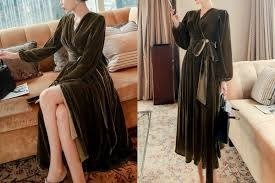
A velvet wrap dress offers more shape flexibility than a slip. The diagonal neckline and adjustable tie suit a wider range of bust and waist proportions. Velvet wrap dresses in rich jewel tones from brands like Anthropologie, Free People, and ASOS regularly appear in the $90 to $160 range. The velvet fitted column gown is the most formal silhouette: it works at black tie adjacent events and photographs with extreme elegance but requires very precise fit because the fabric shows every seam and alteration line.
Color Choices in Velvet
Deep jewel tones are the optimal colors for velvet at winter occasions. Burgundy (wine, oxblood) is the most classic velvet color for winter formal wear and consistently the top-selling velvet shade at major U.S. retailers from September through January. Deep emerald reads regally formal and photographs in a distinctly rich way. Midnight navy in velvet bridges the gap between the universally flattering navy shade and the elevated formality of the velvet fabric.
Deep sapphire, forest green, and plum are strong secondary choices. Black velvet is both appropriate and sophisticated, though it reads less distinctly seasonal than jewel tones. Avoid very pale velvet colors like blush or powder blue at winter formal events. Pale velvet loses the rich depth that makes the fabric so effective and can read as washed out in dim indoor lighting.
How to Style Velvet: Shoes, Jewellery & Hair
Gold jewelry is the most natural pairing for warm-toned velvets: burgundy, wine, deep orange-red. Silver and white gold suit cooler jewel tones: sapphire, emerald, plum. Statement earrings work particularly well with velvet because the fabric itself is already visually weighty. A large gemstone drop earring in the same tonal family as the dress creates a cohesive look without competing elements.
Shoes in a metallic or neutral tone keep the focus on the dress. Gold or bronze heeled sandals for warm-toned velvets. Silver or pewter strappy heels for cool jewel tones. Black court shoes are always reliable with black or very dark velvet. Hair styled up or partially up exposes the neckline and allows any earrings to read clearly, which matters with velvet because the fabric carries enough visual weight that a covered neck can look heavy.
Velvet Do’s and Don’ts
Do choose velvet in quality fabrics: crushed velvet, stretch velvet, and cotton velvet all behave differently. Stretch velvet from brands like Anthropologie has the most flattering drape for the money. Don’t confuse velvet with velveteen: velveteen is cotton-based and lighter in weight, which reads less luxurious in formal settings. Do check that your velvet dress doesn’t show pressure marks, which appear when velvet is sat on or folded. Hang velvet dresses rather than folding them whenever possible.
FAQs
Q: Is velvet appropriate for a wedding guest?
A: Yes. Velvet is one of the most appropriate fabrics for winter wedding guests. It reads formal, photographs beautifully under indoor lighting, and communicates intentional dressing for a special occasion.
Q: What colors does velvet come in for winter formal wear?
A: Burgundy, emerald, midnight navy, deep sapphire, plum, and forest green are the strongest winter velvet colors. Black velvet is also appropriate. Avoid pale pastels in velvet for formal winter settings.
Q: How do I accessorise a velvet dress?
A: Gold jewelry for warm-toned velvets, silver or white gold for cool tones. Metallic or neutral shoes. Statement earrings work well because velvet carries enough visual weight to balance a bold earring.
Q: Can I wear velvet to a black tie wedding?
A: Yes. A velvet column gown or floor-length velvet dress in a deep jewel tone is entirely appropriate for black tie events. It’s one of the few fabrics that naturally reads at this level of formality.
