
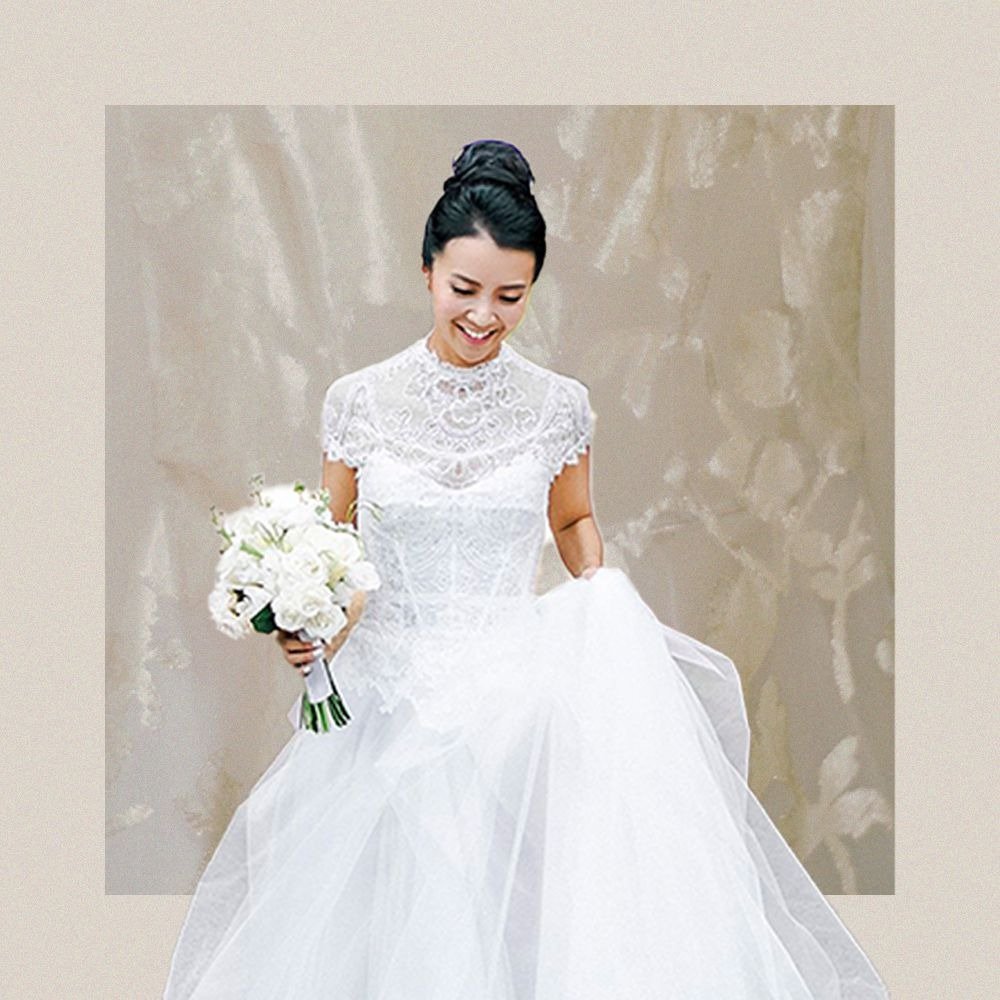
Vintage bridal is one of the most searched categories in U.S. bridal fashion right now. Brides are looking for something with history, personality, and a visual story. But ‘vintage’ covers 80 years of drastically different silhouettes, aesthetics, and cultural moments. Knowing which decade actually appeals to you turns a vague romantic instinct into a clear shopping direction.
1920s: Art Deco and the Drop Waist
The 1920s wedding dress is defined by the drop waist silhouette, where the waist of the dress sits at the hip rather than the natural waist. This created a straight, tubular look that was deliberately anti-Victorian. Fabrics were lavish: silk charmeuse, beaded chiffon, and hand-stitched lace dominated high-end bridal of the era. Art Deco geometric patterns in beading and embroidery are the distinctive embellishment language of 1920s bridal.
A 1920s-inspired wedding dress in 2026 typically takes the form of a short, beaded shift dress or a longer bias-cut silk dress with Art Deco beadwork at the neckline or hem. BHLDN and Jenny Yoo both carry 1920s-influenced bridal styles. Authentic 1920s wedding dresses are available at specialist vintage bridal shops in major cities including New York, Chicago, and Los Angeles, typically in the $500 to $3,000 range depending on condition.
1950s: Full Skirts and Nipped Waists
The 1950s produced the most immediately recognizable silhouette in bridal history: the nipped waist paired with a dramatically full skirt, often over layers of crinoline or tulle. This is the quintessential ball gown silhouette, and virtually every princess bridal gown today traces its lineage back to 1950s construction. Fabric emphasis was on structure and formality: duchess satin, heavy silk, and structured taffeta.
A 1950s-inspired gown suits brides who want the full princess aesthetic with historical grounding. Designers like Theia and Maggie Sottero regularly produce 1950s-adjacent ball gowns in their collections. For authentic 1950s gowns, condition is the primary concern: the structured underlayers often degrade over 70 years, and professional restoration can cost $300 to $1,000 on top of the purchase price.
1960s: The Mod Era
The 1960s broke sharply from the formality of the previous decade. Shift dresses, A-line styles, and shorter hemlines became bridal options for the first time. Jackie Kennedy’s influence on American fashion permeated bridal as well: clean, minimal, sophisticated tailoring replaced the heavy structure of the 1950s. Fabrics became lighter: silk organza, lightweight wool, and simple satin.
A 1960s-inspired wedding dress today reads as modern minimalism. The simple A-line in a quality silk or crepe, with clean lines and minimal embellishment, is the contemporary translation of 1960s bridal. Vera Wang’s minimalist collection and Monique Lhuillier’s clean-line gowns both draw on 1960s principles.
1970s: Bohemian Bridal and Bell Sleeves
1970s bridal introduced the bohemian aesthetic to wedding dresses in a major way. Natural fabrics, flowing silhouettes, bell and bishop sleeves, and floral embroidery defined the decade’s bridal sensibility. Rural and outdoor weddings became more common in the 1970s, and bridal wear adapted: lighter, more movement-friendly gowns replaced the structured formality of the 1950s and 1960s.
The 1970s aesthetic has been the dominant influence on boho bridal since approximately 2015 and shows no signs of fading in 2026. Free People’s BHLDN line, Grace Loves Lace, and Daughters of Simone all produce collections rooted in 1970s boho bridal. Bishop and balloon sleeves from this era have become one of the defining sleeve trends in 2025 and 2026 bridal fashion.
1980s: Big Shoulders, Big Bows, Big Drama
The 1980s are the decade that modern bridal most dramatically reacted against. The exaggerated shoulders, massive layered skirts, and theatrical bows of Princess Diana’s 1981 Emanuel gown and Sarah Ferguson’s 1986 Lindka Cierach gown set a visual standard that dominated the decade. The gowns were spectacular and absolutely of their moment.
Today, 1980s bridal influence appears in isolated elements rather than full silhouettes. The dramatic puff sleeve has returned in a more controlled form as a legitimate bridal trend in 2025 and 2026. Bows have similarly reappeared as embellishment details rather than structural statements. The full 1980s silhouette would read as costume today, but its individual elements have been absorbed into contemporary bridal vocabulary.
1990s: Slip Dresses and Minimalist Cool
The 1990s were a direct reaction to 1980s excess. Slip dresses, column gowns, and clean-lined simplicity defined a decade of deliberately understated bridal. Carolyn Bessette-Kennedy’s 1996 Narciso Rodriguez slip gown is the defining image of 1990s bridal: pure white, bias-cut silk charmeuse, zero embellishment. The anti-dress as wedding dress.
The 1990s minimalist aesthetic is experiencing a significant revival in 2026. The slip gown, the column, and the clean-line A-line are all current. Brands including Emilia Wickstead, Reformation, and Galvan produce what are essentially luxury modern interpretations of 1990s bridal principles. The revival is driven in part by sustainable fashion consciousness, which prizes quality basics over elaborate embellishment.
FAQs
Q: What is the most popular vintage wedding dress era?
A: The 1950s and 1970s are the most popular vintage bridal eras in current U.S. fashion. The 1950s ball gown aesthetic dominates traditional bridal. The 1970s boho influence dominates bohemian and outdoor wedding styling.
Q: How do I modernize a vintage style?
A: Take one distinctive element from the vintage era and pair it with contemporary minimalism. A 1970s bishop sleeve on a clean crepe dress. 1920s beadwork on a modern slip gown. Isolation of the defining element reads current rather than costume.
Q: Are vintage wedding dresses still popular?
A: Yes. Vintage and vintage-inspired bridal is one of the fastest-growing categories in U.S. bridal according to The Knot’s 2024 trend report. Sustainability interest and a reaction against generic bridal aesthetics are both driving the trend.
Q: Where can I buy authentic vintage bridal gowns?
A: Specialist vintage bridal shops in New York, Chicago, Los Angeles, and San Francisco carry curated collections. Etsy has a large vintage bridal market. The RealReal and Vestiaire Collective carry luxury vintage bridal options.
