
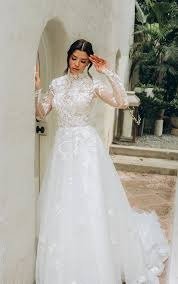
Modest dressing has a persistent image problem in mainstream fashion. It’s treated as a limitation rather than a creative constraint. The reality is that the most elegant red carpets in the world feature women in covered, modest clothing, and that approach works just as powerfully for wedding guest occasions. Here’s how to dress modestly and look undeniably put-together.
What Makes a Dress Modest: Defining Coverage Standards
In most contexts, a modest dress covers the collarbone, the upper arms (at least to the elbow), and the knees. For religious ceremonies with specific modesty requirements (Orthodox Jewish, Islamic, conservative Christian), the standard often extends to covering the wrists and ankles. ‘Modest’ isn’t a single standard but a range, and knowing the specific expectations of the event you’re attending helps you land at the right coverage level.
Best Necklines for Modest Formal Wear
The boat neck (slash neck) is one of the most elegant modest necklines in formal wear. It sits across the collarbone with a relatively wide horizontal opening that shows the collarbone but covers the chest. It’s flattering across almost all necklines and photographs beautifully. High necklines (mandarin collar, jewel neck, turtleneck) are fully covering and suit formal evening occasions particularly well in velvet or crepe.
The square neck is a contemporary modest option that covers fully while creating a modern, fashion-forward frame for the face. Mock-neck and cowl-neck dresses in jersey or chiffon both provide coverage with a current aesthetic. V-necks are modest when the V is moderate in depth (ending above the sternum), which is the most common interpretation in formal wear contexts.
Sleeve Options: Long, 3/4, and Flutter
Long sleeves in formal wear look most elegant in lightweight fabrics. A crepe or silk long-sleeve dress reads much more formal than the same shape in heavy jersey. Three-quarter sleeves are the practical sweet spot for most modest dress occasions: they cover the upper arm, which is a common coverage priority, while ending at the forearm in a way that doesn’t restrict hand movement. This is the most flattering sleeve length for photography because it keeps the hands visible.
Flutter sleeves cover the shoulder and the very top of the arm. They’re modest for casual and semi-formal weddings but may not meet the coverage requirements of the most religiously conservative ceremonies. Sheer sleeves (in chiffon or lace) cover without adding visual weight and are a particularly elegant solution for modest formal wear. A sleeveless dress with sheer chiffon sleeves from a brand like Eliza J gives the appearance of full arm coverage with minimal fabric heaviness.
Length: Why Midi and Maxi Work Best
Midi and maxi lengths naturally align with modest dress standards because they cover the knee and extend below it. A midi dress in a non-clingy fabric that falls to mid-calf covers the knee completely in most sitting and standing positions. Floor-length maxi dresses satisfy the most stringent modesty requirements for ankle coverage. The key for maxi dresses is ensuring enough ease in the skirt to move freely: a too-tight maxi restricts stride and can pull when sitting.
Modest Wedding Guest Dresses for Religious Ceremonies
At a church wedding, particularly in conservative Christian denominations, the coverage standard typically means sleeves to at least the elbow and a hemline to the knee or below. A knee-length dress with 3/4 sleeves in a church setting reads appropriately modest. At an Orthodox Jewish ceremony, full arm coverage to the wrist and a hemline below the knee is standard for female guests. Azazie, Modlily, and Shabby Apple all carry explicitly modest formal wear collections in these coverage parameters.
Fabrics That Don’t Cling
The fabric choice matters as much as the coverage in modest dressing. A long-sleeve dress in a stretchy, body-hugging fabric can technically cover all the required areas while still reading as immodest in its fit. Crepe, chiffon, and ponte all hang away from the body naturally. Avoid bodycon fabrics (spandex-heavy blends) and sheer fabrics that require careful undergarment matching to maintain their coverage promise.
FAQs
Q: What is considered a modest dress for a wedding?
A: At minimum, a modest wedding guest dress covers the collarbone, upper arms to the elbow, and knees. For religious ceremonies, the standard often extends to covering wrists and ankles. Fabric should drape away from the body rather than cling.
Q: Can I wear a long-sleeve dress to a summer wedding?
A: Yes. A lightweight long-sleeve dress in chiffon or linen is appropriate for summer weddings, particularly at religious or traditional venues. Thin, breathable fabrics make long sleeves wearable even in warm temperatures.
Q: What do I wear to a church wedding as a guest?
A: A knee-length or midi dress with sleeves to at least the elbow suits most church weddings. Bring a wrap or bolero if you’re uncertain about sleeve requirements. Avoid deep necklines and tight-fitting silhouettes.
Q: Is it appropriate to add a cardigan to a formal dress?
A: A structured cardigan or tailored jacket is a cleaner solution than a casual cardigan for formal occasions. A bolero, shawl, or jacket in a complementary fabric maintains the formality of the outfit better than a knitted cardigan.
