
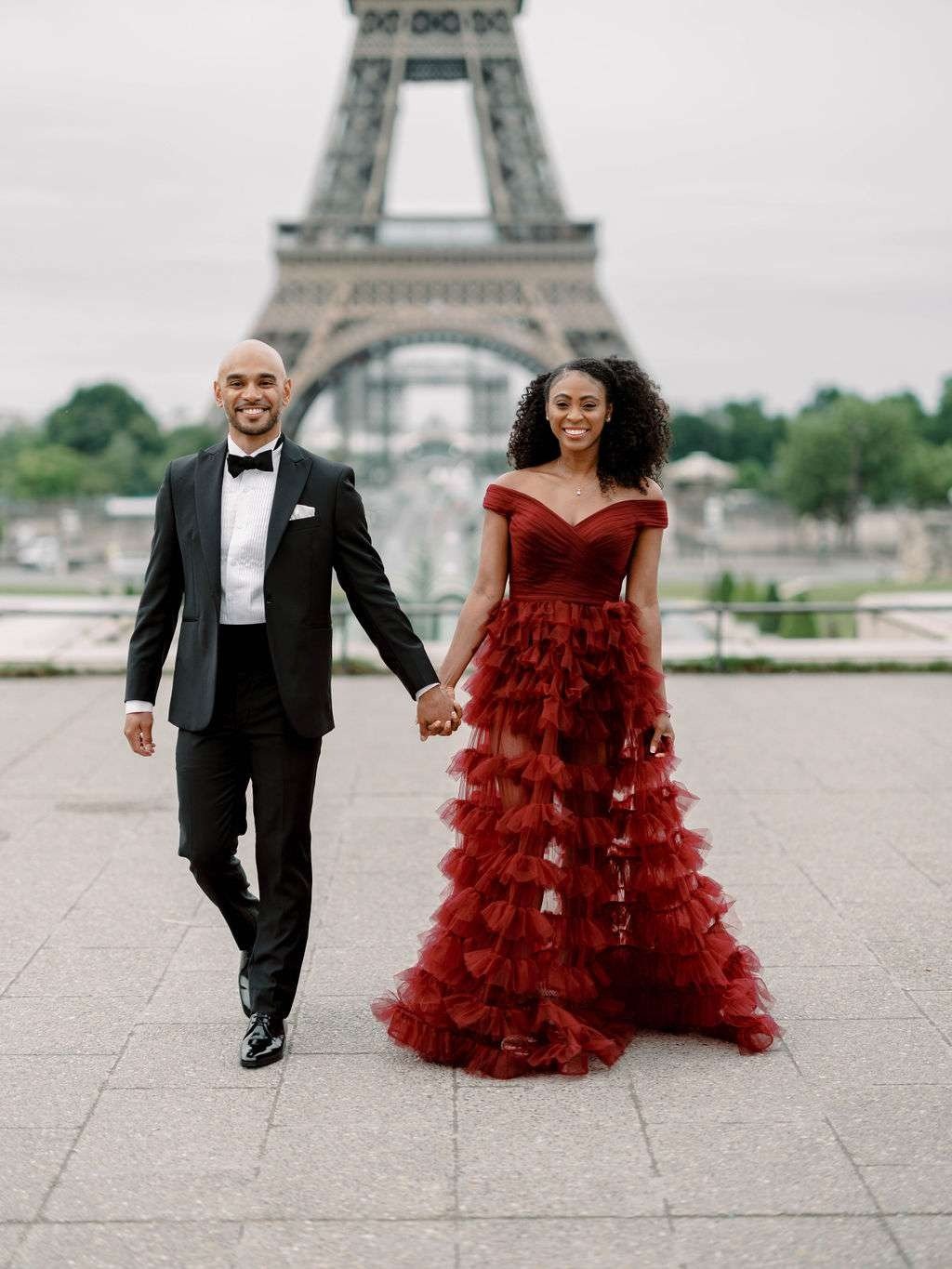
Black tie is the dress code that demands the most from your wardrobe and rewards preparation with the most impactful results. Getting it right means understanding what the code actually requires, not just reaching for the fanciest thing in your closet. I’ve broken down every element of black tie wedding guest dressing so you can walk in with complete confidence.
What Does Black Tie Mean at a Wedding?
**Black tie at a wedding requests floor-length formal wear for women. The code specifically elevates expectations above cocktail attire: a short or midi dress is technically outside the black tie requirement. The expectation is a full-length gown in a formal fabric like silk, satin, chiffon, or velvet. The formality level is just one step below white tie, which is the most formal dress code that exists.**
In practice, many black tie wedding guests in the U.S. interpret the code with some flexibility. A very formal midi dress in an evening-quality fabric (think floor-skimming crepe or a heavily embellished knee-length gown) will not be out of place at most American black tie weddings. But the safest and most elegant interpretation is always floor-length formal wear.
Acceptable Dress Lengths for Black Tie
Floor-length gowns are always correct at black tie events. A floor-length dress in silk charmeuse, duchess satin, heavy chiffon, or velvet communicates immediate formal understanding. The hem should ideally graze or barely touch the floor, which requires wearing your actual wedding-day shoes during alterations to get the measurement right.
Can you wear a midi to black tie? In the strict interpretation, no. In the American social reality of 2026, a very formal midi in an evening-quality fabric with elevated accessories often passes without comment. If you choose a midi for black tie, the dress must do extra work through fabric quality and detailing to compensate for the reduced length. A sequined or heavily embellished knee-length dress can work. A plain crepe midi cannot.
Best Fabrics for Black Tie Wear
Silk charmeuse is the classic black tie fabric. It has a liquid drape and a subtle sheen that photograph with an unmistakable elegance. Real silk charmeuse starts at around $800 in a gown and goes significantly higher. Silk-look polyester satin in a quality weave reads very similarly in photographs and in person under dim lighting for a fraction of the cost. Brands like Natori and Eliza J produce quality satin gowns in the $200 to $400 range.
Duchess satin is heavier and more structured than charmeuse. It suits ball gown and A-line silhouettes where the fabric needs to hold shape. Velvet is the most inherently formal fabric choice and suits both column and A-line gowns for evening events. Heavy double chiffon in a floor-length silhouette is the lightweight alternative for warm venues or guests who find heavyweight fabrics uncomfortable over a long event.
Color Choices at Black Tie Weddings
Black is the most appropriate and widely worn guest color at black tie events. A floor-length black gown with diamond or gold jewelry reads definitively formal. Deep jewel tones: midnight blue, sapphire, emerald, burgundy, and plum, all sit appropriately in the black tie color register. Metallic fabrics (gold, silver, champagne) are formal and appropriate for evening black tie but should be used thoughtfully: full-length metallic gowns work; metallic mini dresses do not.
Jewelry and Accessories for Black Tie
Black tie is the event where your most formal jewelry belongs. Diamond and gemstone jewelry, real or high-quality costume versions, are appropriate. A simple chain necklace looks underdressed at black tie. A statement necklace, chandelier earrings, or a formal cuff bracelet all suit the occasion. Clutch bags should be structured and small: a satin or metallic minaudiere is the black tie standard.
Shoes should be heeled unless health or mobility prevent it. Strappy heeled sandals, court shoes, and pointed-toe heels all work for black tie. Platform heels are on the borderline of appropriate: the platform silhouette reads slightly fashion-forward for a traditional black tie event, though at a younger couple’s modern black tie wedding, they’re fine.
Common Mistakes at Black Tie Events
The most common black tie mistake for women is wearing a beautiful dress that’s the right formality but the wrong length. A stunning cocktail dress at a black tie event reads as under-dressed regardless of how much it cost. The second most common mistake is over-accessorizing: black tie events call for elevated simplicity, not maximum jewelry from every category simultaneously.
FAQs
Q: Do I have to wear a floor-length dress to a black tie wedding?
A: Technically yes. Black tie specifically calls for formal evening gowns, which in the strictest interpretation means floor-length. In American social practice, a very formal heavily embellished midi can pass, but floor-length is always the safest interpretation.
Q: Can I wear a jumpsuit to a black tie wedding?
A: A formal floor-length wide-leg jumpsuit in silk, satin, or velvet can work at black tie. It must be in an unambiguously formal fabric and silhouette. A casual or tailored jumpsuit does not meet black tie requirements.
Q: What jewelry is appropriate for black tie?
A: Statement pieces including chandelier earrings, diamond or gemstone necklaces, and formal cuff bracelets suit black tie. Avoid overly casual jewelry like simple stud earrings with no other jewelry, which can look underdressed.
Q: Is black appropriate at a black tie wedding?
A: Yes. Black is the most appropriate and widely worn color at black tie events. A floor-length black gown with formal jewelry is one of the most reliably elegant black tie guest choices.
